
Many Paths to Chapleau
People came to Chapleau for different reasons. Railway workers followed the tracks. Forestry workers followed jobs in the bush and mills. Merchants saw a place where workers and travellers needed goods. Teachers, nurses, clergy and public staff came to serve a growing town. First Nation families were already part of the region and often moved between the land, nearby communities and town.
Some newcomers planned to stay only a season. Northern work had a way of changing those plans. A worker might marry, buy a home or bring relatives to town. Over time, family networks grew. Chapleau became a place where several languages and backgrounds met in a small area.
French Chapleau
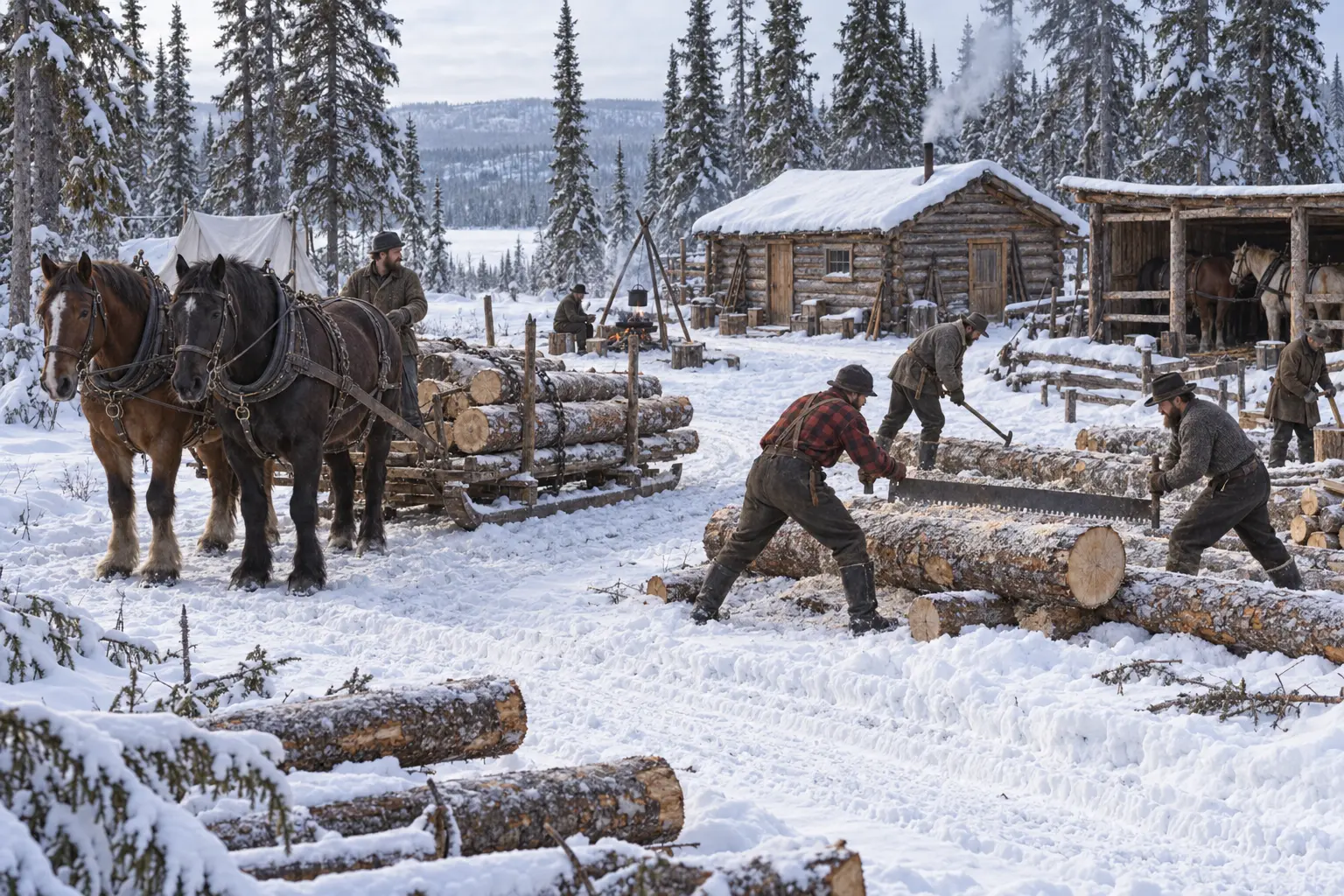
French Canadian workers made a strong mark on Chapleau, mainly through forestry and related work. Many came from Quebec. Their families built French language homes, church groups, schools and social clubs. Music, food and holiday customs helped people feel connected across long distances. French remains an important local language.
The French speaking population did not stand apart from the rest of town life. People worked on the railway, ran businesses, served in public jobs and joined sports teams. Many families used both French and English in daily life. Language could shift between home, school and work, yet French identity stayed strong through family use and local institutions.
Several communities, one town
English Speaking Families
English speaking workers arrived with the railway, trade and public services. Some came from other parts of Ontario or from elsewhere in Canada and Britain. Railway rules and office work were often carried out in English, which gave the language a strong place in business and government. English language schools and churches grew with the town.
Life in a small town encouraged contact across language lines. Children met at sports events and public activities. Workers depended on one another in rail yards, logging camps and shops. Mixed language families became common. People did not always agree, but daily northern life created many reasons to cooperate.
Métis Families
Métis history in Northern Ontario grew from ties among Indigenous and European people during and after the fur trade. Métis men and women often worked as guides, interpreters, traders, transport workers and providers. Their family knowledge joined Indigenous land skills with the needs of the fur trade. Métis families developed their own shared identity and traditions.
The written record did not always name Métis people clearly. A census taker, company clerk or priest might use changing labels for the same family. This can make local research hard. Family records, oral history, church registers and fur trade papers may need to be read together. Métis people should be named in Chapleau's story without treating their identity as a footnote to someone else's.
Newcomers From Europe
Workers also arrived from Finland and other parts of Europe. Forestry and mill work offered a start, though the jobs were hard and the winters could be severe. Newcomers brought foods, songs, skills and family customs from home. Some joined churches or clubs linked to their language, while others entered the wider French or English life of the town.
Immigration stories often include both hope and strain. A steady wage could support a family, but remote work separated people from relatives. Newcomers had to learn local weather, laws and work systems. They also entered a land where First Nations had already faced outside settlement and control. A fair account holds all of these facts together.
Shared Northern Life
Chapleau's size meant that people often met in the same stores, arenas, schools and public events. Hockey, curling, fishing, church suppers and service clubs helped create shared memories. When a family faced a fire, illness or death, neighbours often helped no matter which language they spoke. This practical care became part of the town's character.
Differences did not disappear. Language rights, religion, jobs and public decisions could cause tension. Indigenous families also faced unfair laws and treatment that settlers did not face. Telling the human story of Chapleau means showing friendship and shared effort while being honest about unequal power. The town's past belongs to many peoples, and each deserves to be heard in its own voice.
Food Music and Celebration
Family meals carried memories from one generation to the next. French Canadian dishes, Indigenous foods, bush camp meals and recipes brought by European newcomers all found a place in local kitchens. Ingredients sometimes had to be changed when a familiar item was hard to buy. Fishing, hunting, berries and gardens added local food to what came by rail or road.
Music and dance also crossed language lines. Fiddles, songs, church choirs and public dances gave people ways to gather after work. Holiday meals and seasonal events mixed family customs with northern life. These ordinary moments matter because they show how people kept a sense of home while also building new ties with neighbours.
More than one language at home
The sound of Chapleau has never been limited to one language. French and English have long been heard in town, alongside Indigenous languages and family traditions. A language can shape where someone worships, studies, gets the news or shares a family story. Those choices help explain why two people living on the same street may remember a different side of the town.
The township's community profile names the neighbouring First Nations, its francophone community and its Métis community. These are living communities, not just entries in a historical list. Their accounts belong in a story of Chapleau today as much as in one about early settlement. Oral histories and family records can fill gaps left by business directories and railway files, which tend to record work and property more readily than home life.