
A Forest Economy
Chapleau is surrounded by a broad northern forest. Black spruce, jack pine, poplar, birch and other trees grow across the region. For Indigenous families, the forest has always supplied food, medicine, shelter and materials. It is also a living homeland with responsibilities attached to it. Commercial logging brought a different kind of use, with trees cut in large numbers for sale.
Rail access made commercial forestry far more practical. Lumber companies could move workers and supplies into the region and ship wood to distant mills and markets. Chapleau became a service point for camps spread across a wide area. Stores sold gear and food. Railway cars carried equipment one way and forest products the other.
Life in the Bush Camps
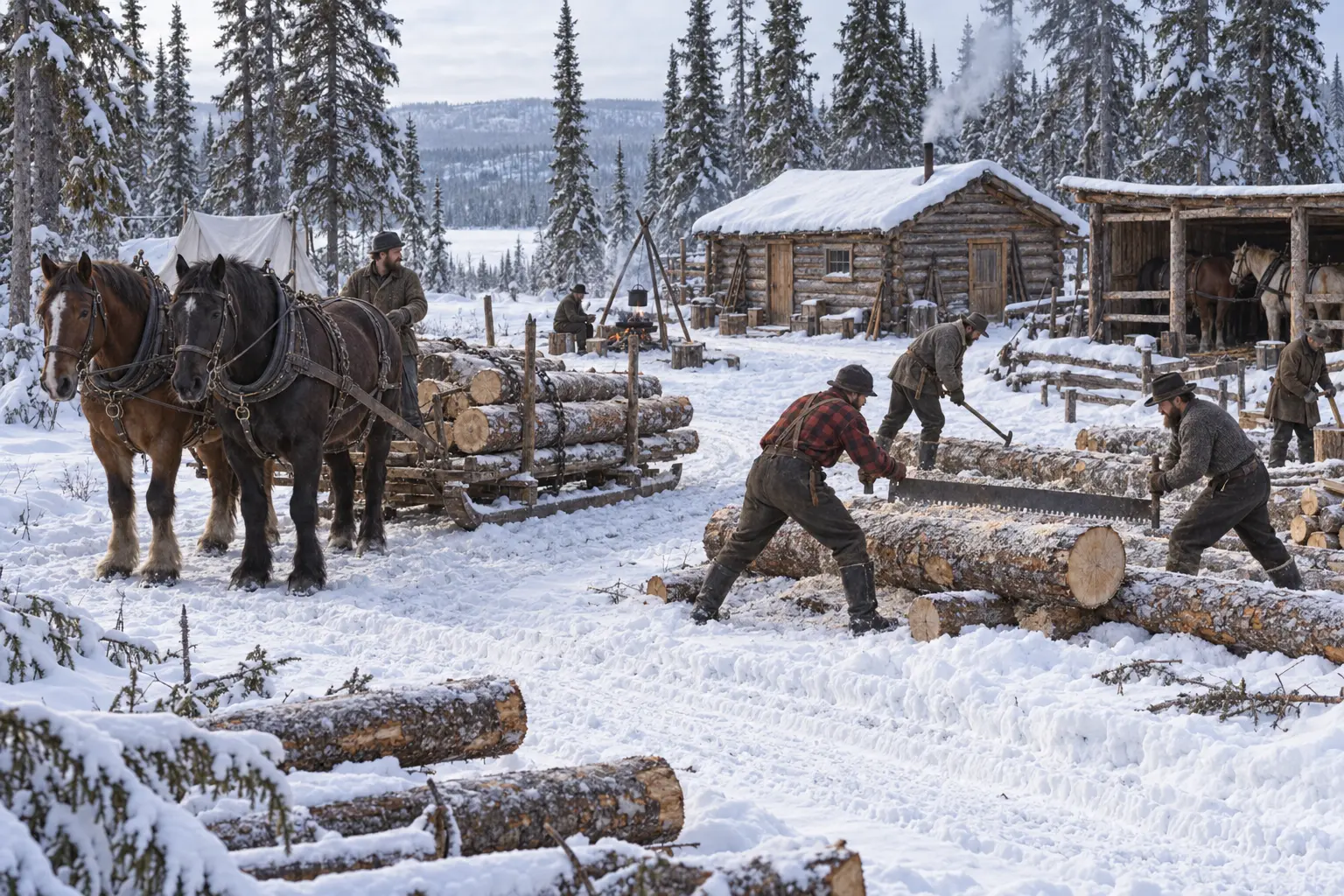
Early logging crews often lived in remote camps during the cutting season. Bunkhouses were plain, crowded and heated by wood stoves. Men slept in rows of bunks and ate large meals made for heavy work. Camp cooks had to feed crews every day with supplies that could be difficult to replace. Horses needed feed and care as well.
Workers used axes and crosscut saws to bring down trees. They trimmed branches and moved logs with horses, sleds or simple machines. Frozen ground and snow could make winter hauling easier. Even so, the job was dangerous. Falling trees, sharp tools, heavy logs and severe weather could cause serious injuries. Medical help might be hours away.
A forest and rail town
Moving the Wood
Getting timber out of the bush was often as hard as cutting it. In some places, logs were hauled to waterways and driven downstream after the spring thaw. River drivers worked on moving logs and broke up jams. A shift in the logs could trap or crush a worker. Other timber moved by narrow forest rail lines or sled roads before reaching the main railway.
Trucks later changed the system. Logging roads reached farther into the forest and allowed wood to move in more seasons. In 1948, a major fire damaged a large amount of timber in the region. A road was needed so companies could move wood before it spoiled. The route south from Chapleau, now Highway 129, was finished in early 1949. The road ended the town's complete dependence on rail access.
French Canadian Workers
Many French Canadian workers came from Quebec to work in the forests north of Chapleau. Some arrived for a season and returned home. Others brought families or settled in town. Their language, faith, music, food and family life became a lasting part of Chapleau. French schools, church life and local groups helped families keep their language across generations.
Workers also came from other parts of Canada and from overseas. Finns and other European newcomers found jobs in mills and camps. English speaking railway and business families lived beside French speaking forestry families and First Nation neighbours. Daily life brought these groups together, though each also faced its own struggles and kept its own traditions.
Machines Change the Job
Power saws replaced much hand cutting. Skidders, loaders, harvesters and heavy trucks later did work once handled by large crews and horses. The new machines raised output and changed the skills workers needed. A modern machine operator could cut and move many trees in a day. Repair shops, fuel supplies and trained mechanics became more important.
The change also reduced the number of workers needed in the bush. Camps became smaller or closed. Workers often travelled to job sites by road instead of living away for an entire season. Forestry remained a major part of the region, but its effect on town life changed. One large machine could now do work that once paid many people.
Forestry and the Land
Commercial forestry must balance jobs with the health of the forest. Cutting affects wildlife, water, roads and places used for hunting, trapping and gathering. Forest plans now set rules for where and when trees may be cut. First Nations seek a strong role in decisions about their traditional lands and a fair share of jobs and income from resources taken there.
The story of forestry near Chapleau is therefore about both work and responsibility. Logging wages helped build homes, businesses and public services. At the same time, the forest is more than a supply of wood. It holds animal habitat, clean water, family camps and old travel routes. Its future depends on careful choices made with the people who live closest to it.
Fire in the Northern Forest
Fire has always been part of northern forest life. Some fires renew parts of the forest, but a large fire can threaten camps, towns, rail lines and timber. Before aircraft and modern crews, spotting and fighting a remote fire was slow. Smoke might be seen from a tower, train or camp, and workers used hand tools, pumps and cleared ground to slow the flames.
The 1948 fire near Chapleau became a turning point because damaged timber had to be removed quickly. The need for road access helped push the province to finish a southern road link. The event shows how fire, forestry and transport were connected. A natural disaster changed both the forest industry and the way residents reached the town.
From bush camp to town
A camp's work reached well outside the cut area. Crews needed tools, food, horses or machines, transport and repairs. Supplies passed through town; logs and lumber travelled onward to customers. This helps explain why forestry influenced local shops and rail traffic as well as jobs in the woods.
Methods changed with roads and machinery. A truck could reach places that once depended on seasonal routes, while a mill needed dependable transport for a steady flow of wood. The forest, however, was never simply an empty source of timber. It was part of Indigenous territories and the home of wildlife and waterways. Any account of forestry needs room for both the work it provided and the choices made about the land.