
The Centennial Museum
The Chapleau Centennial Museum opened on July 1, 1967, during Canada's centennial year. It was built as a local project with donated supplies, money and labour. That beginning suits a museum devoted to the town. Chapleau has long relied on residents who give time and skill to shared work.
The museum keeps records and objects linked to railway work, forestry, family life and local groups. A museum object may seem ordinary at first. A tool, uniform, kitchen item or photograph becomes valuable when it is tied to a named person and a clear story. These small records help show how people lived, not only when major events occurred.
The Steam Locomotive
A large steam locomotive stands near the museum and Elm Street. It is hard to miss. Its weight, wheels and steel parts show the scale of the machines that once passed through Chapleau every day. For older railway families, it can bring back the sound, smoke and labour of the steam age.
The locomotive also gives younger visitors a starting point. They can ask how coal and water made it move, who kept it running and why Chapleau needed rail yards. A single machine opens a door to the larger story of engineers, firemen, mechanics, section crews, station staff and their families.
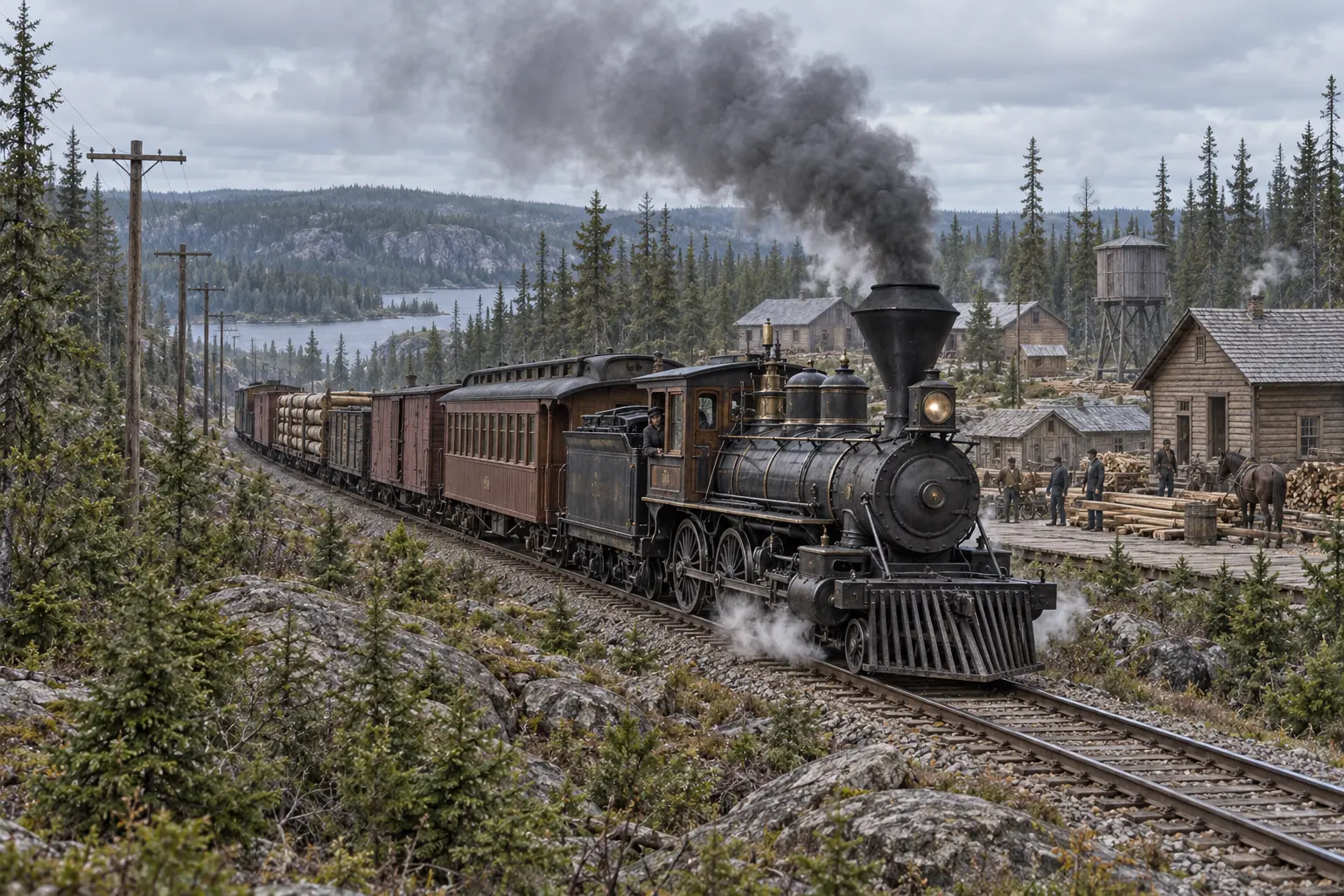
A locomotive moved into the park
The Railway District
The rail line and station area remain central landmarks even as buildings and services have changed. The placement of tracks explains why early streets and businesses grew where they did. Hotels, stores and homes needed to be close to passengers, freight and railway jobs. The town faced the rails because the rails were its main road to the outside world.
Historic photographs are useful when walking this area. A current view can be compared with an older station, yard or main street scene. Some buildings are gone, but their old locations still explain the town's layout. These then and now views can turn an ordinary walk into a lesson in local change.
Louis Hémon in Chapleau
French writer Louis Hémon is linked to Chapleau through a tragic event. On July 8, 1913, he was struck and killed by a train while travelling west. He was only 32. His best known novel, Maria Chapdelaine, later became one of the most widely read French Canadian novels of its time.
Hémon spent only a short time in the area, yet his death gave Chapleau a place in French literary history. His story also shows the danger of walking railway tracks. Early rail travel opened Canada, but moving trains and busy yards were dangerous places for workers and travellers alike.
People Worth Remembering
Local history should include people whose names never entered a national book. Railway workers kept trains moving through winter. Bush workers spent months in remote camps. Nurses cared for patients far from a large hospital. Teachers worked with limited supplies. Business owners extended credit when families were between paydays. Volunteers built clubs, rinks and public projects.
Sports also gave Chapleau names known outside the town. Hockey players such as Floyd Curry carried a local connection onto larger stages. Yet fame is only one way to measure a life. The people who raised families, cared for neighbours and kept services running made the town possible. Their photographs and stories deserve space beside well known names.
Keeping Stories Safe
Local memory can be lost quickly. Names fade from the back of photographs. Old letters are thrown out. Buildings are removed before anyone records them. Families can help by writing names, dates and places on copies of photographs and by recording older relatives as they tell stories. Permission should be obtained before public sharing.
First Nation stories require added care. Some knowledge belongs to a family or community and is not meant for public use. Local writers should ask, listen and respect a decision not to share. Chapleau's landmarks matter most when they lead back to people. A building or machine gains meaning through the lives connected to it.
Murals Cemeteries and Small Clues
Not every landmark is a large building. Murals can show local scenes and people in public view. Cemeteries record family names, languages, military service and the hard loss of children or young workers. Old signs, bridge remains and street names may offer clues about businesses or routes that have disappeared.
These places should be read with care. A painted scene may simplify the past, and a grave marker gives only a few facts. Researchers can compare what they see with newspapers, maps, family papers and oral accounts. Small clues often lead to the most personal stories, but facts should be checked before a name or claim is placed online.
What the museum grounds can tell us
Centennial Park places several local stories close together. The museum has displays on the town's past; steam engine 5433 recalls the labour that kept trains moving; monuments remember railway workers and writer Louis Hémon. Each feature answers a different question. The engine tells you about transport and heavy machinery, while a monument asks you to think about a person or a loss.
The township says engine 5433 was moved into the park in 1964. Getting such a large locomotive off the working line required a special track. The result is a public landmark that people can see up close, even if they never rode a steam train. Look at the locomotive's size beside the 1911 station photograph on the railway page: one records a working town, while the other preserves a piece of the machinery that once passed through it.
Local references: Township museum and local landmarks.