
A Town Once Reached by Rail
For many years, the railway was Chapleau's main link with the rest of Canada. Passengers, mail, food and building supplies arrived by train. A trip to another town began at the station. The rail schedule affected business hours, family visits and the delivery of news. Chapleau felt remote, but the main line also placed it on a route that crossed the country.
Today, roads carry most personal travel and many goods. Highway 129 links Chapleau southward, while Highway 101 runs east and west. Cars and trucks give residents more choice, though long distances, winter weather and fuel costs remain part of northern travel. The railway still matters for freight and employment, but it no longer controls every movement in town.
Work Has Changed
Railway and forestry jobs once required large crews. Steam engines needed many workers in yards and shops. Logging camps used teams of cutters, horse handlers, cooks and river drivers. These jobs created busy seasons and supported local stores, hotels and services.
Diesel engines, heavy forestry machines and better roads reduced the size of many crews. Modern work often needs technical training and fewer workers can produce more. Government, health, education, retail, transport and First Nation services now make up more of the local job picture. The old industries remain, but their daily effect is different.
A museum for local records
Homes and Public Services
Earlier homes depended on wood or coal heat, stored food and a great deal of manual work. Water, waste collection, electricity, telephones and better medical care changed home life. Snow removal and road work made winter movement safer. Fire equipment and building rules reduced some of the risks that came with wooden buildings and stoves.
Modern services bring new needs. Internet access now affects school, business and health care. Reliable power and communications matter during storms. A small northern town must pay for roads, water and public buildings with a limited tax base. The basic question has stayed the same. How can residents maintain the services they need across a great distance?
Language and Family
French, English and Indigenous languages all belong to the Chapleau area's story. In earlier years, language was often tied closely to home, church, school and work. Some families faced pressure to use English in public. Indigenous children across Canada were also taken into school systems that tried to remove their languages and family ties.
Today there is stronger public support for French and Indigenous language learning, though much work remains. Families still carry the main role in passing on words, songs and stories. A language lives when people use it in ordinary life, with children, grandparents, friends and neighbours.
Old Places New Uses
Towns change as buildings age and businesses close or move. A former store may become an office or home. A rail building may vanish, leaving an open lot. Schools and churches may serve fewer people than they once did. These changes can feel like loss, yet a building may gain a second life when a new use keeps it standing.
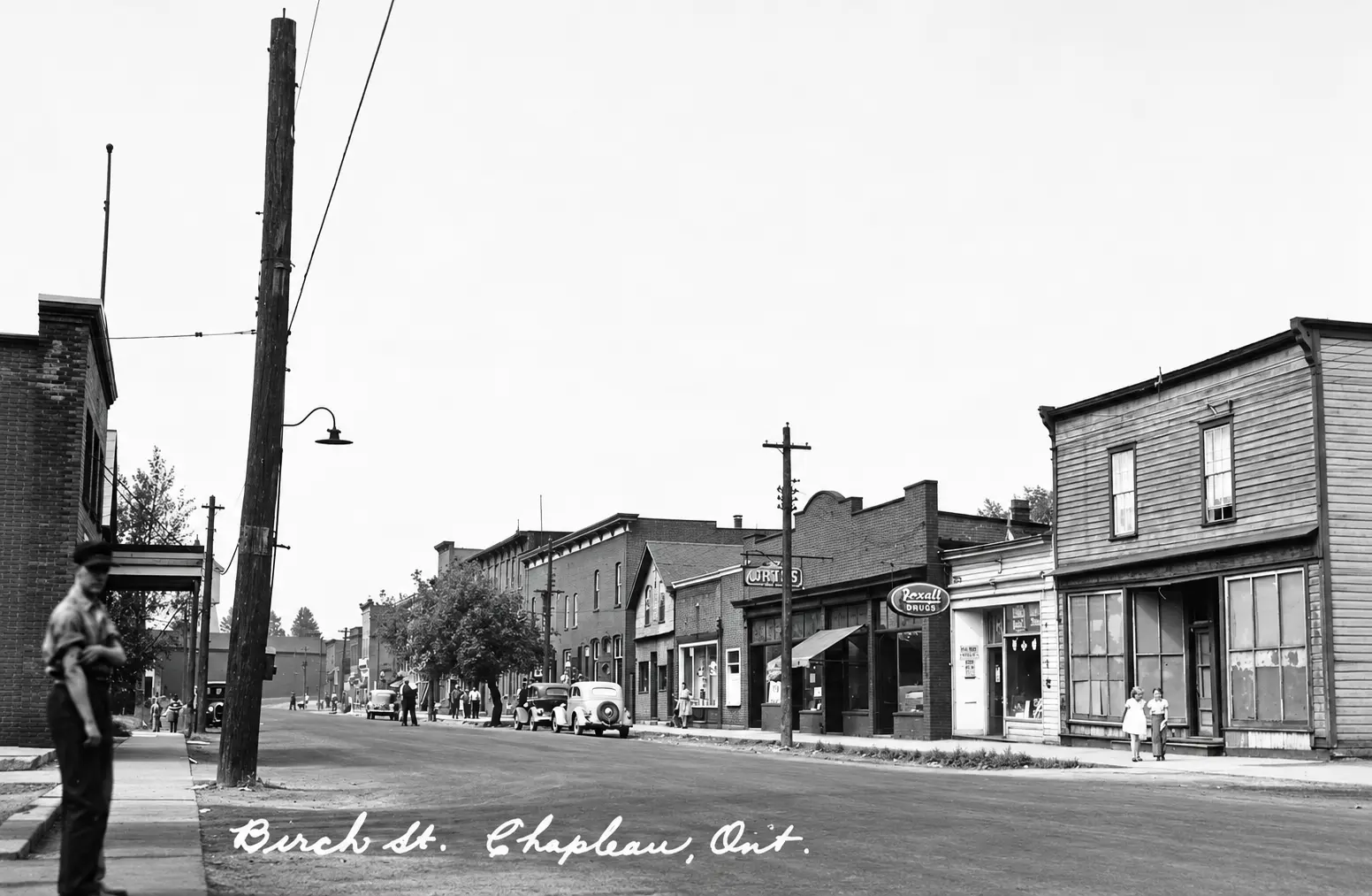
Then and now photographs are one of the clearest ways to show change. A photo pair can reveal the loss of a station, the growth of trees, a changed storefront or a rebuilt street. Captions should name the view, date and source when known. Good records let future residents see what changed and what stayed.
The Land Remains Central
Chapleau still depends on the land around it. Forests support jobs and wildlife. Lakes and rivers support fishing, travel and outdoor life. The Crown Game Preserve remains a major part of the region's public image and a place tied to First Nation rights and history. Fire and severe weather still remind people that northern life requires care and planning.
The strongest link between Chapleau then and now is the way people respond to distance. Residents have long built local answers when larger centres were far away. They raised funds, volunteered, shared skills and spoke up for services. Chapleau has changed from a steam railway town into a modern northern community, but its past remains visible in the tracks, streets, forests and family stories.
Keeping the Past Useful
History is most useful when it helps people understand the place where they live. Old flood, fire and road records can guide public planning. Forestry records can show how work and the land changed. Railway photographs can help explain town growth. Family accounts can show how public decisions affected people in ways that official reports missed.
A local website can keep this material easy to reach, but it should name its sources and correct errors when better records appear. It can invite residents to share photographs and memories with clear permission. The goal is not to freeze Chapleau in an earlier time. It is to give present and future residents a truthful record they can keep adding to.
Looking at two Chapleaus at once
A then-and-now photograph works best when it asks a clear question. Has a building disappeared, changed use or simply gained a new sign? Did a road alter the view, or did the trees grow around it? Even a scene that appears unchanged can hide a different way of living and working. Comparing images requires a date, a viewpoint and, when possible, a note about who made the photograph.
Public records can help with the picture, but residents often supply the missing detail: the name of a shop, the year a family moved, or the reason a building mattered. Readers with dated photographs and reliable captions can write to the site. Those contributions can help the site show change without treating every older image as proof that life was simpler or better in the past.